One of the most important factors in a pocket watch conversion is something most people never see: the mass of the balance wheel. It quietly determines how well a movement will handle life on the wrist, how it responds to shock, and how reliably it keeps time once removed from its original pocket environment.
Early American watchmakers engineered these movements for a very specific lifestyle. Pocket watches lived vertically in a vest or trouser pocket, largely protected from sudden motion. When we convert these same movements into wristwatches, the mechanical environment changes entirely. On the wrist, the balance must deal with constant positional changes, wrist acceleration, and the bumps and jolts of everyday wear. To understand which movements provide the most reliable conversions—and which do not—it helps to look closely at the physics behind them.
The simple physics that controls everything
When the wrist moves, the balance wheel experiences acceleration. The force generated on the staff and pivots depends directly on the mass of the balance:
Force = Mass × Acceleration
Using Newtons Second Law of Motion, it becomes clear that a higher mass will produce a greater force during acceleration. This law directly impacts the reliability of a pocket watch conversion because a heavier balance cannot instantly change direction. It resists motion during acceleration and deceleration, and that resistance transfers mechanical stress into the pivots, jewels, and staff.
Since vintage American movements have no shock protection systems, they absorb these forces directly. This is why movement size matters. Larger pocket watch sizes, such as 16s and 18s, were built with much larger balances, and those balances exert significantly more force on the escapement during positional changes. Over time, this can result in broken pivots and damaged jewels.
6s movements and smaller — the most naturally stable
The 6-size platform and smaller have the lightest balances found in vintage American pocket watches. These movements adapt to wristwear with almost no complaint. The low balance mass produces very little force during motion, which keeps amplitude steady and positional variation minimal. For conversions, 6s movements and smaller are about as forgiving and stable as it gets.
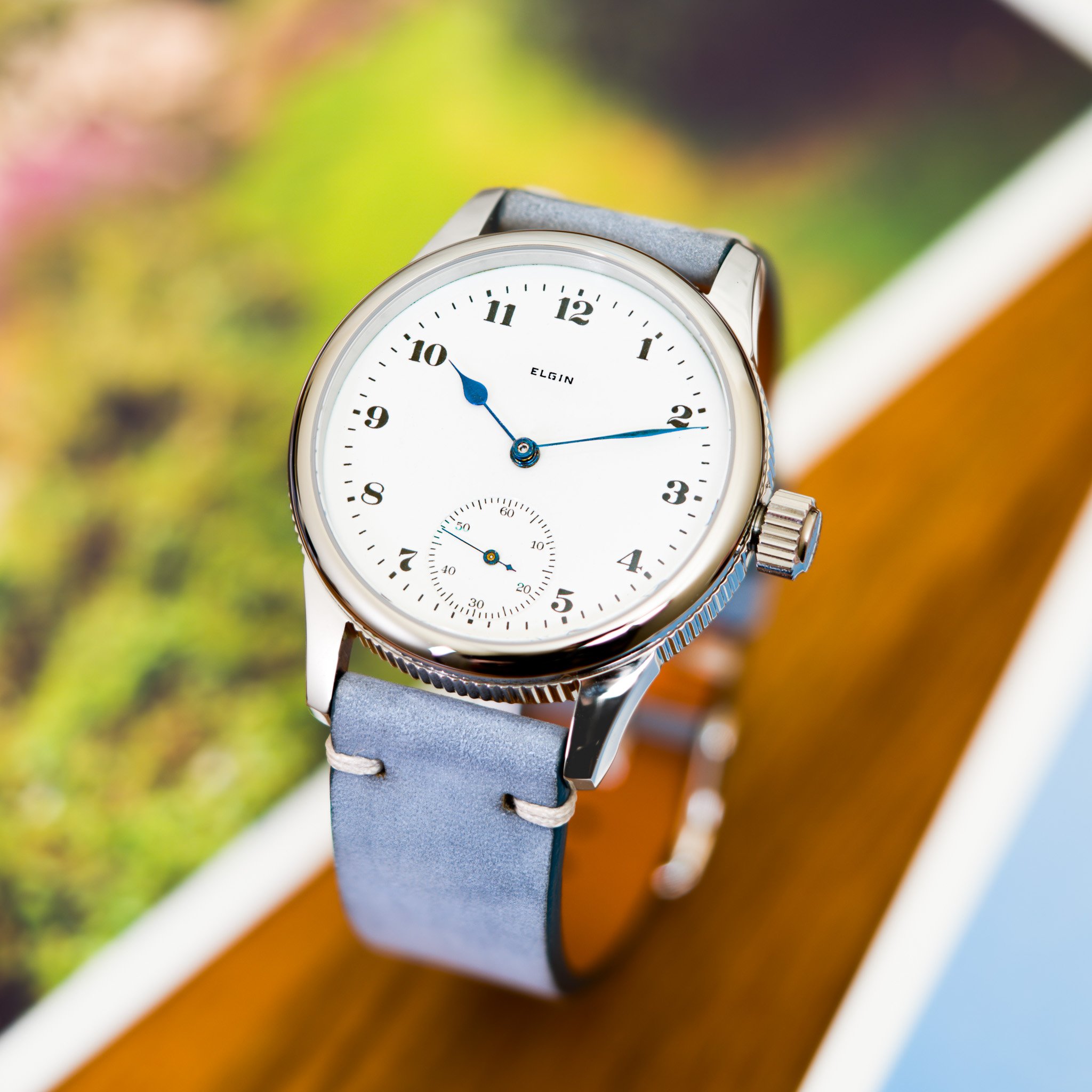
6s pocket watch conversion
12s and 10s movements — slightly larger but still excellent
12-size and 10-size movements have slightly larger balance masses than 6s, but not enough to create noticeable issues. These movements remain very stable once converted and perform well across a variety of positional changes. They handle daily motion with ease, maintain consistent amplitude, and rarely develop staff or pivot problems from wrist use. They also offer the advantage of a slightly larger wrist presence without sacrificing mechanical integrity or stability.
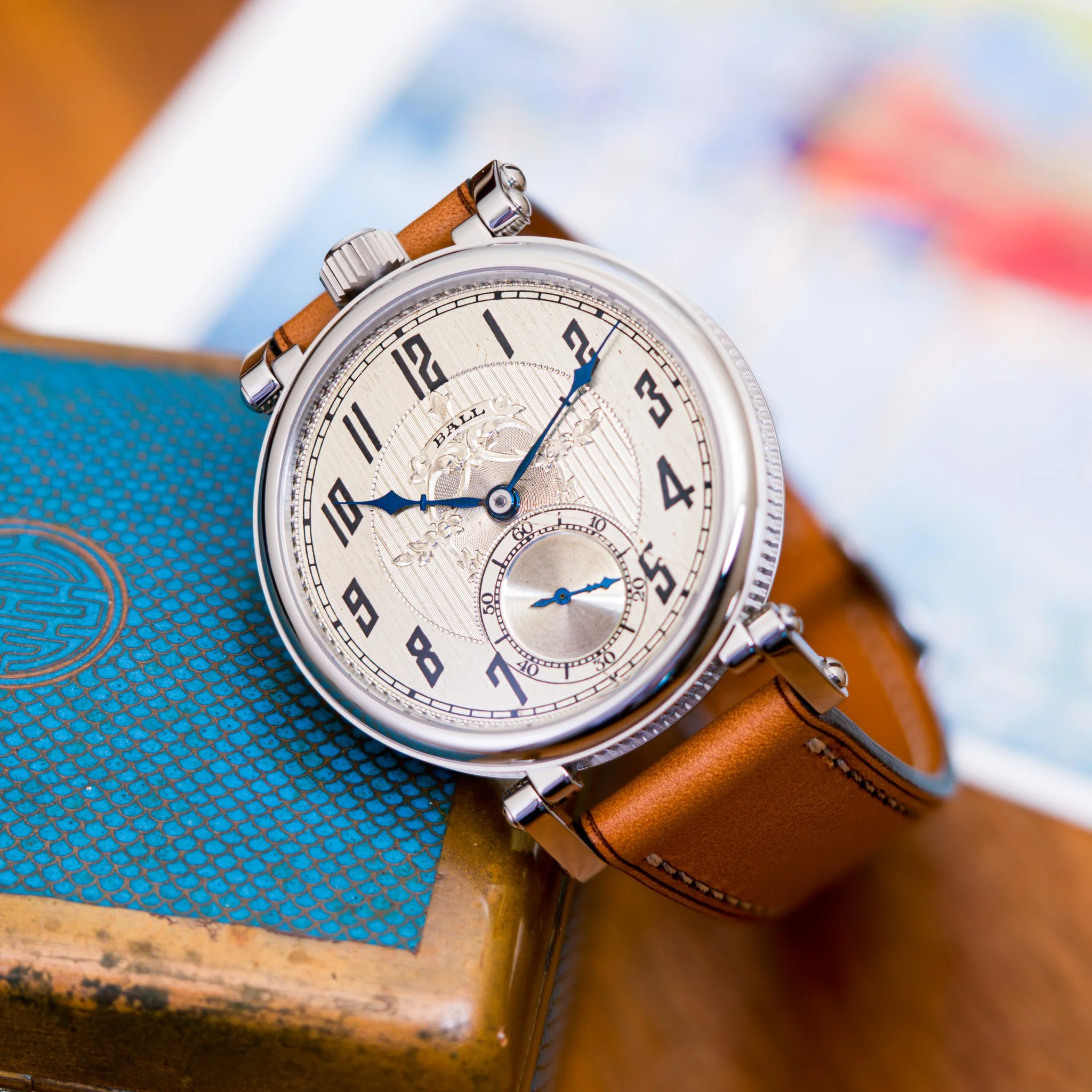
12s pocket watch conversion

12s pocket watch conversion
16s movements — historically profound, but they demand expert work
When conversions first became popular, 16s movements were the traditional choice. They are plentiful, visually impressive, and easy for collectors to source. Many of these movements are Railroad Grade or were used during military operations in WWI and WWII. The historical depth of this size is significant and cannot be overstated.
From a mechanical standpoint, however, the 16s platform introduces a balance with a substantial jump in mass. On the wrist, that heavier balance generates much higher force during motion. Without meticulous restoration and servicing, the movement can show:
wider amplitude swings
more pronounced positional changes
increased stress on the staff and pivots
increased wear over time
Even with these challenges, a 16s conversion can still run beautifully on the wrist—but only when every step of the restoration is executed to a high standard. Pivots must be perfectly polished, jewels must be burnished and clean, the balance must be precisely poised, and the integrity of the escapement geometry must be verified under stress. It is important to note that 16s movements are not inherently unstable, but their balance mass makes them less forgiving. They demand real expertise to perform well as wristwatches.
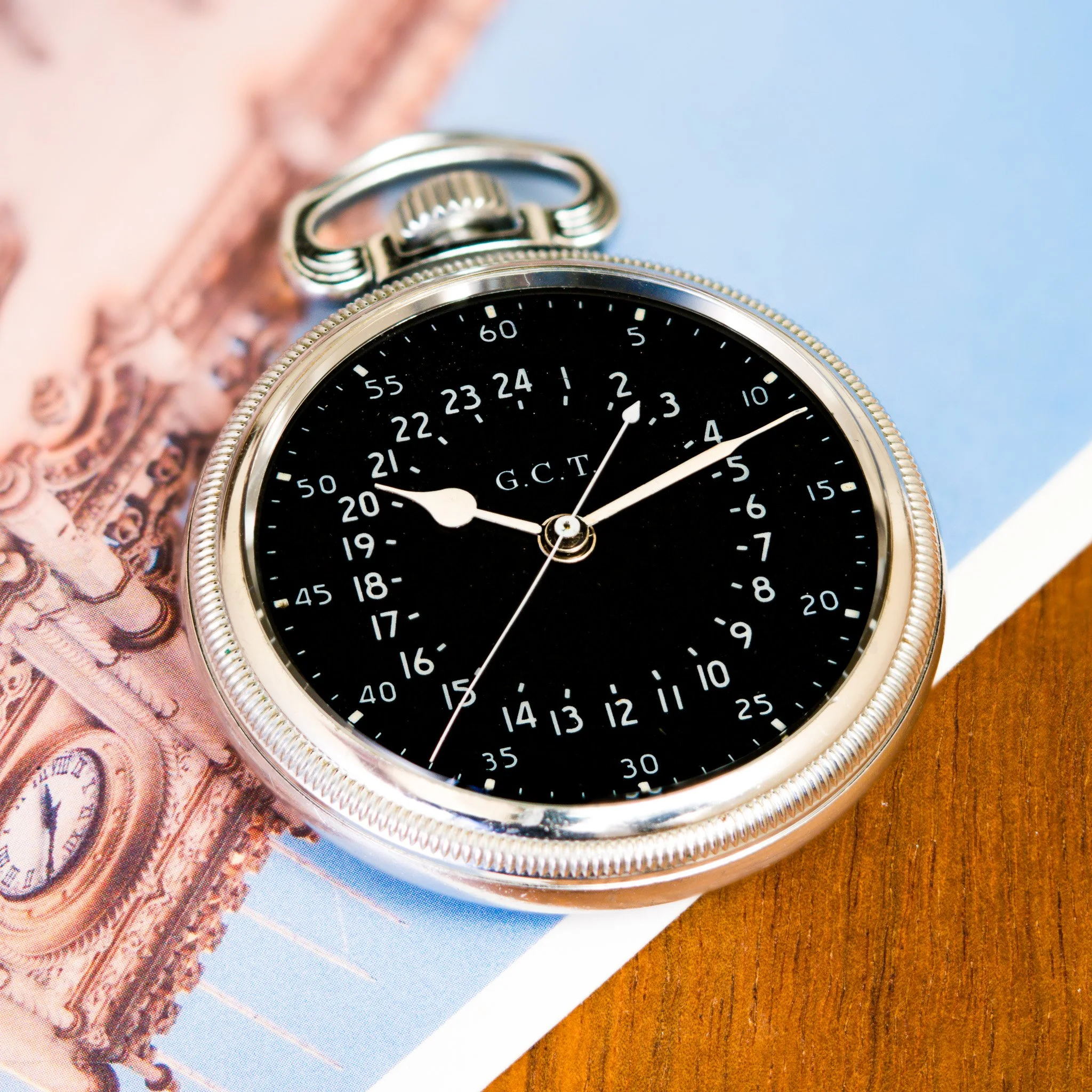
16s pocket watch
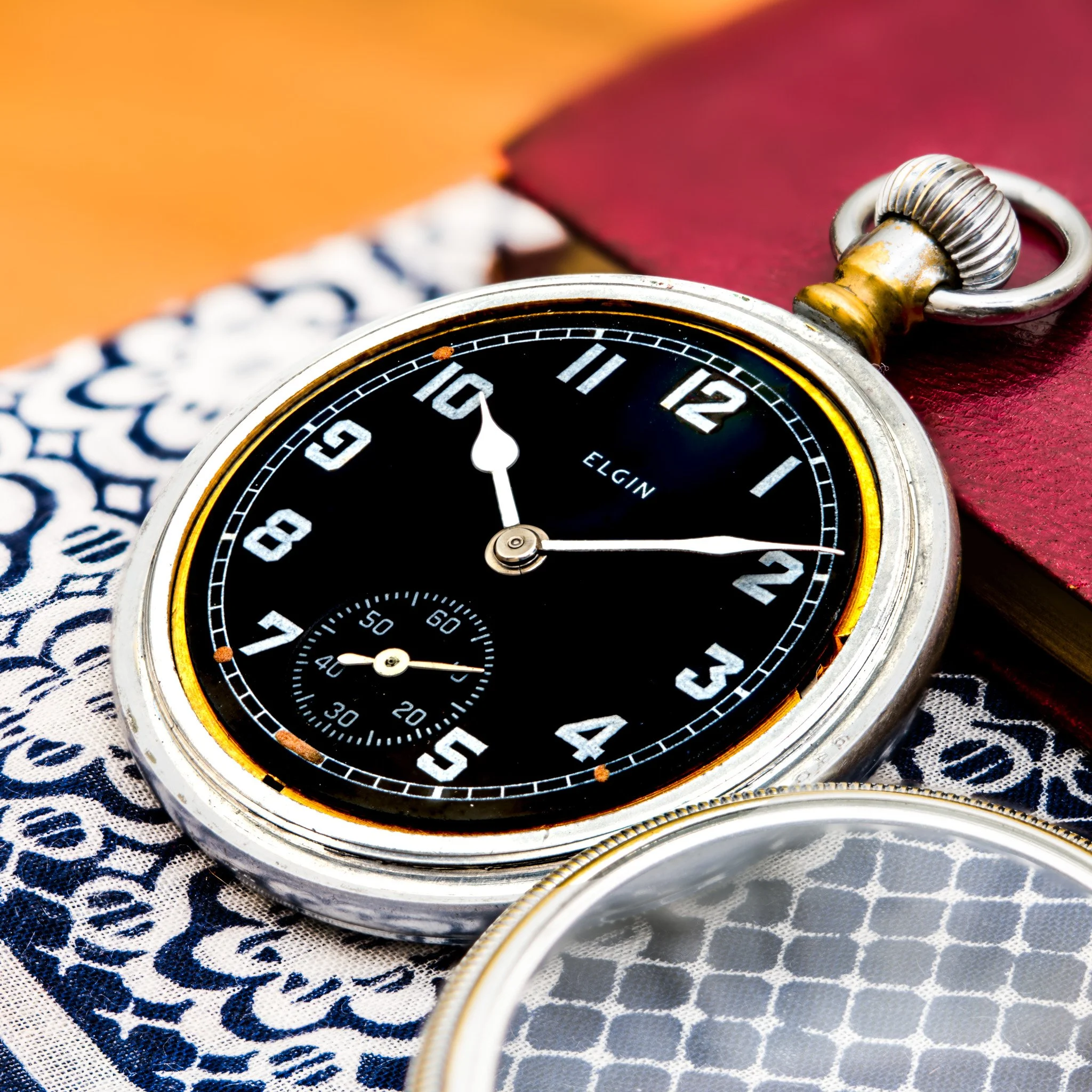
16s pocket watch
18s movements — sometimes converted, but mechanically unsuitable
The 18-size pocket watch contains one of the largest balance assemblies found in vintage American watchmaking. These balances were engineered for pocket use, where the watch lived quietly in a single stable position. When worn on the wrist, an 18s balance produces extremely high inertial forces with every movement.
Performance on the wrist as a pocket watch conversion is not ideal, with most 18s conversions exhibiting:
major positional variance
significant stress on the balance staff
heavy wear on pivots and jewels
poor amplitude consistency
greatly accelerated mechanical fatigue
Even with perfect restoration, an 18s movement will never behave well on the wrist. The physics simply do not support it. For this reason, 18s movements are best enjoyed as intended—as a pocket watch kept in a fixed position. They also make excellent desk clocks.

18s pocket watch
Why the largest movements show the most broken staffs
The service history of these watches tells the same story as their physics. Smaller movements almost never arrive with broken staffs, except in cases where damage occurred during tinkering or improper service. Larger movements, especially 16s and 18s platforms, often show multiple past staff replacements and visible wear around the pivot shoulders and jewel holes. The reason is straightforward: heavier balances generate more force when moved or shocked, and that force translates into increased damage to pivots, jewels, and the staff.
Over decades, this wear pattern becomes impossible to miss as a watch records its own mechanical history. The scars on the staff, the shape of the pivot shoulders, the condition of the jewels, and the erosion of endshake tolerances all reveal how much force a movement has endured. In larger sizes, the physics leave a clear signature.
Final thoughts: choose the right size, respect the engineering
A pocket watch conversion is only as good as the movement behind it. Smaller balances (12s and smaller) transition gracefully into wristwear. Larger balances (18s and larger) were never designed for the shock-heavy environment of daily wrist use.
12s and smaller: naturally stable and excellent for conversions
16s: historically converted, but require expert-level restoration to perform well
18s: historically converted, but should not be converted today
A proper conversion respects both the physics and the craftsmanship of the original movement. When the right movement is selected and restored with the appropriate level of care, a converted pocket watch can become a remarkably durable and beautiful timepiece that performs wonderfully on the wrist.